How can artists challenge systems of power when they are not allowed to permanently alter a space?
3. Primary Understanding & Learning Goals
Students will investigate how artists have developed alternative forms of street art in response to legal restrictions, surveillance, and institutional control.
Students will examine how the inability to leave permanent marks often leads to more creative and conceptually sophisticated forms of intervention.
4. Technical Objectives
Students will:
Analyze examples of graffiti, street art, and public art.
Document marks found throughout their school or community.
Categorize marks according to power structures.
Design a site-responsive temporary installation or drawing that comments on visibility and permission.
5. Materials, Equipment, & Tools
Cameras or phones
Sketchbooks
Chalk
Painter’s tape
Paper
Markers
6. Sequence of Activities
Day 1
Discussion: What counts as a legitimate mark?
Students examine examples ranging from cave paintings to graffiti tags to public monuments.
Day 2
Site walk around school.
Students document:
official signs
student marks
graffiti
announcements
memorials
Day 3-4
Students identify a location where a temporary intervention could reveal a hidden power structure.
Day 5
Students install and document their work.
7. Formative Assessment
Site observations
Sketch proposals
Written rationale
Peer discussion regarding how effectively the work addresses power
8. Artists
Jean-Michel Basquiat
Mossy Giant
Keith Haring
LESSON CONCEPT #2 Mapping Invisible Systems
1. Assignment Connection
Systems Thinking & Information Design Unit
2. Key Question
How can artists reveal invisible systems without adding permanent objects to a space?
3. Primary Understanding & Learning Goals
Students will understand that systems of power often operate invisibly through rules, routines, expectations, and social structures.
Students will investigate how schools, cities, governments, social media platforms, and communities organize behavior through hierarchical systems.
Students will learn that artists can reveal hidden structures through visual representation
Students will investigate how site-responsive artists expose hidden systems through subtle interventions.
Rather than making a mural, students create work that points viewers toward something already present but often ignored.
4. Technical Objectives
Students will:
Identify a system they participate in.
Analyze relationships between individuals, institutions, and authority.
Create a visual map of a system.
Use design strategies to communicate hierarchy and power relationships.
5. Example Interventions
Social Traffic Maps
Students use temporary chalk arrows showing how people actually move through a school versus intended routes.
Power Maps
Students identify spaces where:
students have authority
teachers have authority
administrators have authority
and create temporary visual markers highlighting those zones.
Reverse Graffiti Pathways
Students use water or cleaning techniques to reveal overlooked circulation patterns.
6. Materials, Equipment, & Tools
Sketchbooks
Large paper
Colored markers
Illustrator or Canva
Projector
7. Sequence of Activities
Day 1
Discussion: What is a system?
Students brainstorm systems they interact with:
school
social media
transportation
sports
family structures
Day 2
Students create diagrams identifying power relationships.
Day 3-5
Students transform diagrams into large-scale visual maps.
Day 6
Critique focused on clarity and interpretation.
8. Formative Assessment
Brainstorming charts
System diagrams
Draft reviews
Reflection explaining identified power structures
9. Artists
Candy Chang
LESSON CONCEPT #3 Guerrilla Kindness: Reimagining Public Space
1. Assignment Connection
Site-Specific Installation & Community Engagement Unit
2. Key Question
How can artists temporarily transform public spaces to empower others?
3. Primary Understanding & Learning Goals
Students will understand that public space is not neutral.
Artists can use temporary interventions to:
disrupt expectations
encourage participation
create community
challenge social hierarchies
Students will investigate how street artists use creativity rather than property damage to reshape experiences of shared spaces.
4. Technical Objectives
Students will:
Analyze examples of site-specific street art.
Identify underutilized or overlooked spaces.
Design temporary interventions.
Document public interaction with their work.
Possible Interventions
Yarn Bombing Transforming fences, bike racks, or trees with knitted coverings.
Plant Graffiti Using natural materials to create temporary images.
Hidden Messages Installing temporary signs that encourage reflection.
Community Prompt Walls “What should change about this space?”
Projection Art Temporary nighttime projections.
Interactive Chalk Installations Inviting participation from others.
5. Materials, Equipment, & Tools
Research materials
Sketchbooks
Presentation boards
Digital design software
6. Sequence of Activities
Day 1: Explore & Discuss
Examine examples of green graffiti, reverse graffiti, yarn bombing, and public interventions.
Discuss how artists use temporary art to challenge or reshape public space.
Conduct a site walk and identify potential locations for intervention.
Day 2: Plan
Sketch ideas and select a site.
Write a brief proposal explaining the site’s significance and intended impact.
Receive peer and instructor feedback.
Day 3: Create & Install
Create and install temporary, site-responsive interventions.
Photograph and document the work.
Day 4: Reflect & Share
Present documentation.
Discuss how the intervention engaged with power, systems, or hierarchy.
Complete a short written reflection.
7. Formative Assessment
Students document:
Their intervention.
Why they chose the site.
What system, hierarchy, or social norm they hoped to address.
How does your art practice and / or teaching pedagogy relate to the art worlds of contemporary youth?
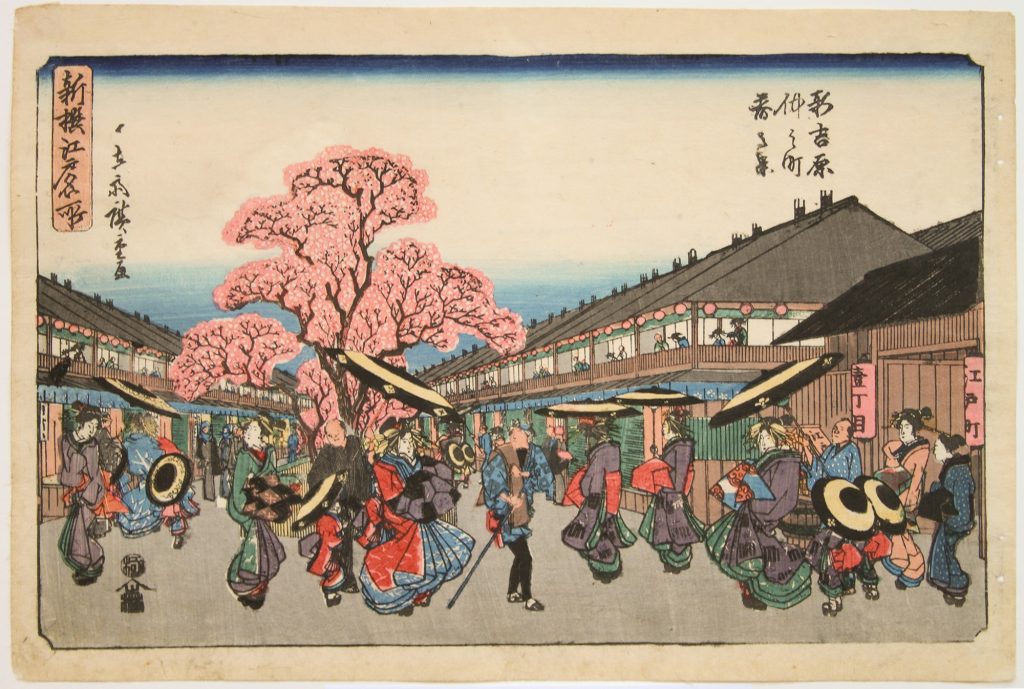
I think that using ukiyo-e artists’ floating world is easily transitional to modern day graphic design and art just by looking at personal experiences. Yes, it may look vastly different in terms of production, outcome, and materials though, the concept and intent still remains.
So, when I look at my design practice and teaching philosophy, I see a ton of relevance to contemporary youth. This could completely be biased though, looking at lessons and concepts that I plan for, I always try to fit in my students’ everyday lives.
I believe that the youth are who determine what is modern, what is contemporary and what is fresh. So, whether it’s music taste in their album redesign, or narrative zine that forces them to express their identity, students are brought into the modern art world just by bringing their interests into their work.
LESSON CONCEPT #1
Mapping the Contemporary Floating World
1. Assignment Connection
Visual Culture Mapping | Graphic Design & Identity Unit
2. Key Question
Where do contemporary youth experience their own “floating worlds,” and how can visual systems represent those spaces?
3. Primary Understanding & Learning Goals
Students will understand that ukiyo-e artists documented spaces of entertainment, social interaction, fantasy, and escape that existed alongside everyday life.
Students will investigate the digital and physical spaces that function as contemporary floating worlds, such as:
TikTok
Discord
Roblox
concerts
conventions
fandom spaces
gaming communities
social media feeds
Students will consider how these spaces influence identity, relationships, and self-expression.
4. Technical Objectives
Students will:
Analyze ukiyo-e as visual documentation of cultural spaces.
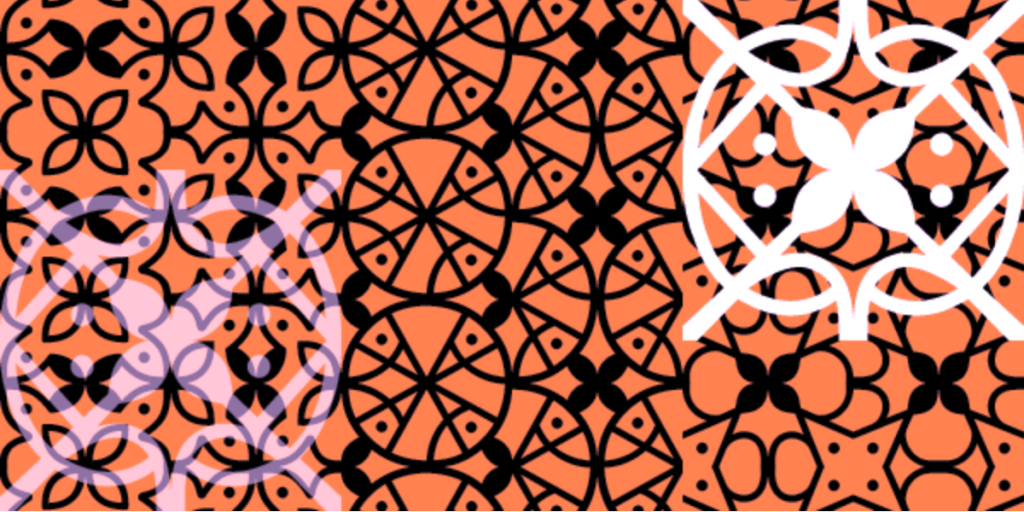
Use FontStruct as a pixel-based design tool rather than strictly a type-design tool.
Create a system of custom glyphs, icons, and symbols representing their contemporary floating world.
Construct a visual map or diagram of their cultural ecosystem.
5. Materials, Equipment, & Tools
Computers
FontStruct
Sketchbooks
Projector
Research images
Printer
6. Sequence of Activities
Day 1 Discussion: What was the floating world in Edo Japan?
Students identify spaces where they spend time, build identity, seek entertainment, or connect with others.
Day 2 Students sketch symbols for:
favorite platform
fandom
game
music community
hobby
online persona
I demonstrate how FontStruct can be used to build modular visual symbols.
Day 3-4 Students create a library of glyphs in FontStruct. Instead of letters, each character slot becomes a visual icon.
Day 5 Students use the glyphs to create a large infographic-style map showing how their floating world functions.
7. Formative Assessment
Sketchbook brainstorming
Symbol iterations
Instructor conferences
Peer feedback discussing whether symbols effectively communicate cultural experiences
8. Artists
Utagawa Hiroshige
Marian Bantjes
LESSON CONCEPT #2
Snapshots of the Floating World
1. Assignment Connection
Narrative Illustration | Zine Unit
2. Key Question
What moments from contemporary youth culture deserve to be documented as art?
3. Primary Understanding & Learning Goals
Students will understand that ukiyo-e did not primarily document kings, heroes, or major historical events.
Instead, artists recorded:
entertainers
fashion trends
leisure activities
daily routines
fleeting moments
Students will examine how ordinary experiences can become significant cultural records.
4. Technical Objectives
Students will:
Analyze visual storytelling in ukiyo-e.
Develop observational drawing and composition skills.
Create a series of illustrations documenting moments from their own floating world.
Assemble images into a folded zine.
5. Materials, Equipment, & Tools
Sketchbooks
Ink pens
Zine templates
Printer
6. Sequence of Activities
Day 1 Analyze ukiyo-e prints depicting daily life.
Discussion: What would future historians learn about Edo Japan from these images?
Day 2 Students create a list of moments from their own floating worlds:
scrolling TikTok at midnight
gaming with friends
waiting in a concert line
texting in a group chat
Day 3-5 Students create 4-6 illustrations documenting those moments.
Day 6 Students bind and share zines.
7. Formative Assessment
Thumbnail sketches
Artist statements
Peer critiques focused on storytelling
8. Artists
Katsushika Hokusai
Utagawa Kuniyoshi
Lynda Barry
LESSON CONCEPT #3
Selling the Floating World
1. Assignment Connection
Advertising & Visual Persuasion Unit
2. Key Question
How does popular culture persuade people to participate in particular lifestyles, communities, and identities?
3. Primary Understanding & Learning Goals
Students will understand that ukiyo-e prints were not simply artworks, they also functioned similarly to modern media.
They promoted:
actors
entertainers
fashion
tourism
cultural trends
Students will investigate how contemporary visual culture markets lifestyles and identities through influencers, fandoms, brands, and entertainment.
4. Technical Objectives
Students will:
Analyze persuasive visual strategies.
Examine historical and contemporary examples of promotion.
Design a poster advertising a contemporary floating world.
Apply principles of hierarchy, color, composition, and audience awareness.
5. Materials, Equipment, & Tools
Photoshop/Canva
Printer
Research materials
Sketchbooks
6. Sequence of Activities
Day 1 Compare ukiyo-e actor prints with:
influencer posts
gaming advertisements
concert promotions
anime posters
Discussion: What are these images selling?
Day 2 Students select a floating world they belong to.
Day 3-5 Students design promotional posters inviting viewers into that world.
Day 6 Class critique examining visual persuasion techniques.